
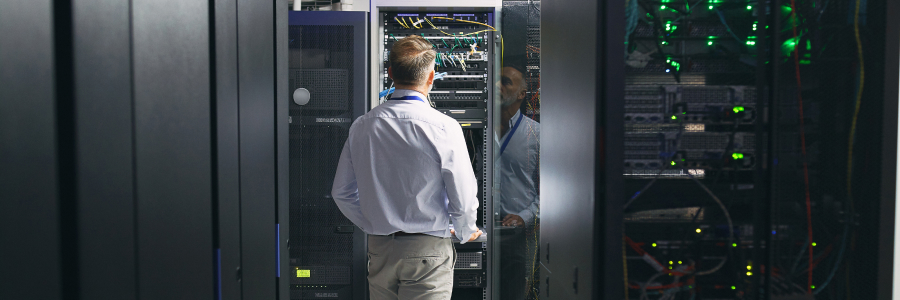
While cloud computing offers significant advantages, it is not always the best long-term home for every application or workload. Increasingly, organizations are reevaluating their cloud strategies and exploring cloud repatriation as a way to improve performance, reduce costs, and regain greater control over their data.
Would your business be better served if you brought workloads back on-premises? Let’s take a look.
What does cloud repatriation mean?
Cloud repatriation is the process of moving applications, workloads, or data from a public cloud environment back to on-premises infrastructure, private data centers, or private cloud platforms.
This does not necessarily mean you would abandon the cloud entirely. Instead, it involves determining whether certain systems would operate more effectively within a more controlled environment.
In the years since the cloud went mainstream, businesses have rushed to migrate because of its flexibility and scalability. However, in the time since, workloads have matured, and usage patterns have become predictable, changing the financial realities in some cases. When some organizations discovered that maintaining specific workloads on-premises delivers better results, the cloud repatriation debate began and continues into 2026.
How does cloud repatriation work?
Cloud repatriation projects vary by organization, but each one roughly follows this process:
- Identify workloads that may be underperforming in the cloud
- Evaluate cloud spending and resource utilization
- Plan infrastructure requirements for repatriated systems
- Migrate applications and data piecemeal to minimize disruption
- Test and optimize workloads after migration
The goal is not to completely overhaul network infrastructure, but instead to reorganize and place each workload where it provides the most value.
When does it make sense to bring workloads back from the cloud?
Just because some organizations have found that repatriation is the right move, it doesn’t mean you should go and cancel all your cloud subscriptions. However, there are several warning signs that may indicate that it’s worth considering.
Your cloud costs are getting out of hand
Cloud pricing can become difficult to predict as your storage requirements grow and applications consume more resources. Data transfer fees, storage costs, and constantly running workloads can create unexpectedly high monthly bills, which could be reduced if you handled them in-house.
Speed and performance aren’t where they need to be
If some of your applications require low latency or process large amounts of data continuously, hosting them in faraway data centers could hamper performance. In these situations, hosting workloads on-site or in nearby private data centers may improve responsiveness and reliability.
Compliance and data governance requirements
If you’re in an industry that must follow strict cybersecurity regulations regarding data storage, access, and security, you may not have a choice when it comes to repatriation. Maintaining direct control over sensitive information is required by some rules, and if it isn’t, repatriation can still simplify compliance efforts.
You want more choice and flexibility
Vendor lock-in is another factor. Some organizations find themselves heavily dependent on a single cloud provider's tools and services. If you want to avoid this, repatriating selected workloads can improve flexibility and reduce long-term dependency on one vendor.
Don’t go into the repatriation debate asking whether the cloud is good or bad. Instead, ask whether each workload is running in the environment that best supports your business goals.
The hybrid model: A flexible option
Fortunately, cloud repatriation is not all or nothing. For many businesses, the answer lies somewhere between full cloud adoption and complete cloud repatriation.
A hybrid cloud model combines cloud services with on-premises infrastructure. Some workloads remain in the public cloud, while others operate in private environments. This allows you to take advantage of both approaches.
A hybrid approach offers several advantages:
- Improved cost optimization
- Greater flexibility for workload placement
- Better compliance and data governance options
- Enhanced performance for specific applications
- Reduced dependence on a single infrastructure model
Many organizations now view hybrid cloud environments as the most practical option. Rather than forcing every workload into the same environment, you can evaluate each one individually and choose the platform that delivers the best combination of performance, security, compliance, and cost-efficiency.
To learn more about the benefits of repatriation and maximize the value of your cloud spend, contact XBASE and speak to our cloud consultants. We’ll help determine which options best meet your business needs, then implement them for you quickly and cost-effectively.